
The Dangerous Gap Between Personal Opinion and Marketing Reality
Business owners often make a critical mistake when evaluating marketing tactics: they confuse personal preferences with strategic decisions. “I hate pop-ups, so my customers must hate them too.” This seemingly logical conclusion creates a dangerous disconnect between what could work and what actually gets implemented in your data-driven marketing strategy.
The truth is uncomfortable but necessary: your personal feelings about marketing tactics have little correlation with their effectiveness for your specific audience. While you might instantly delete marketing emails, your data might show that email campaigns drive 35% of your revenue. This disconnect isn’t just an interesting observation, it’s potentially costing your business significant growth opportunities.
When Subjective Judgment Overrides Objective Results
At Prospect Future, we regularly encounter business owners in Fort Collins and across Northern Colorado who struggle with this exact challenge. The conversation typically follows a predictable pattern:
- “I never click on pop-ups, so we shouldn’t use them.”
- “I ignore all marketing emails, so email marketing won’t work for us.”
- “I skip video ads, so we shouldn’t invest in them.”
These statements reflect integrity and genuine concern for customer experience, which we value. However, they also represent a fundamental misalignment between subjective experience and objective performance data. Your data-driven marketing strategy must prioritize what works, not just what feels comfortable.
The Growing Importance of First-Party Data
Recent updates like Apple’s privacy enhancements in early 2024 have made first-party data more valuable than ever before. With third-party tracking becoming increasingly limited, the actions your audience takes directly with your brand, from email opens to website interactions, provide essential insights that cannot be ignored.
For local businesses in Loveland, Windsor, and throughout Colorado, these shifts make it even more critical to leverage every data point available rather than relying on assumptions. A comprehensive data-driven marketing strategy creates clarity around which tactics drive meaningful engagement, regardless of personal preferences.
How to Overcome Personal Bias in Marketing Decisions
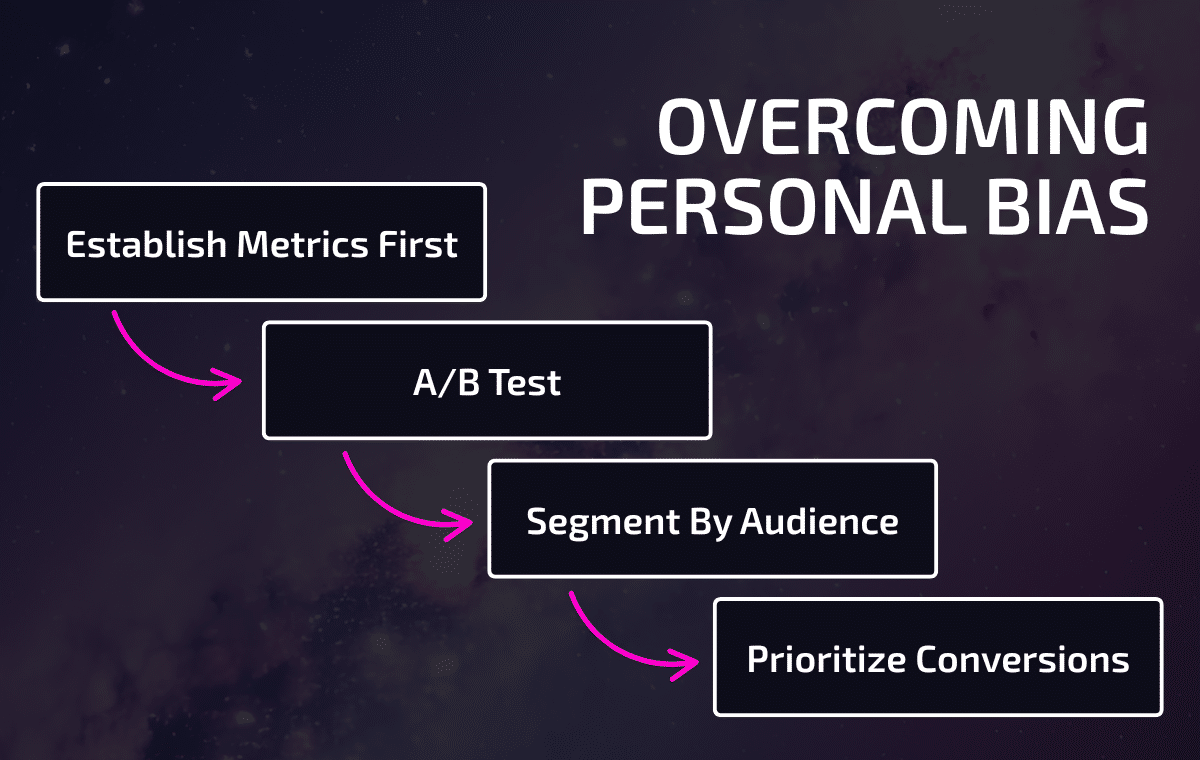
Separating personal bias from strategic marketing decisions requires intentional effort. Here are practical steps to ensure your marketing decisions align with data rather than preference:
- Establish baseline metrics before judgment: Before deciding any tactic “won’t work,” test it with clear performance indicators.
- Create meaningful comparison periods: Run tactics you’re skeptical about alongside those you believe in, comparing results objectively.
- Segment audience responses: Different portions of your audience may respond differently to various tactics, revealing opportunities your bias might miss.
- Prioritize conversion impact over personal comfort: Tactics that initially seem annoying may prove essential to your conversion funnel when measured properly.
The most successful businesses we work with have one thing in common: they follow their data even when it contradicts their personal marketing preferences.
Making Peace with Effective Marketing Tactics
Many business owners struggle with implementing marketing tactics they personally dislike. The key is reframing your thinking:
Marketing isn’t about what you would respond to, it’s about what works for your specific audience. Pop-ups may convert at 3-5% for your business. Email marketing might contribute significantly to your overall revenue. Video ads could drive engagement that text simply cannot match.
A holistic, integrated data-driven marketing strategy connects these elements into a cohesive system where each component serves a specific purpose based on performance data, not personal preference.
Brand Guidelines vs. Performance Marketing: When to Hold Firm and When to Adapt
Every business faces a crucial balancing act between brand consistency and marketing performance. Understanding when to prioritize brand guidelines over marketing data, and vice versa, can determine whether your business thrives or struggles to gain traction.
The Hierarchy of Brand Elements
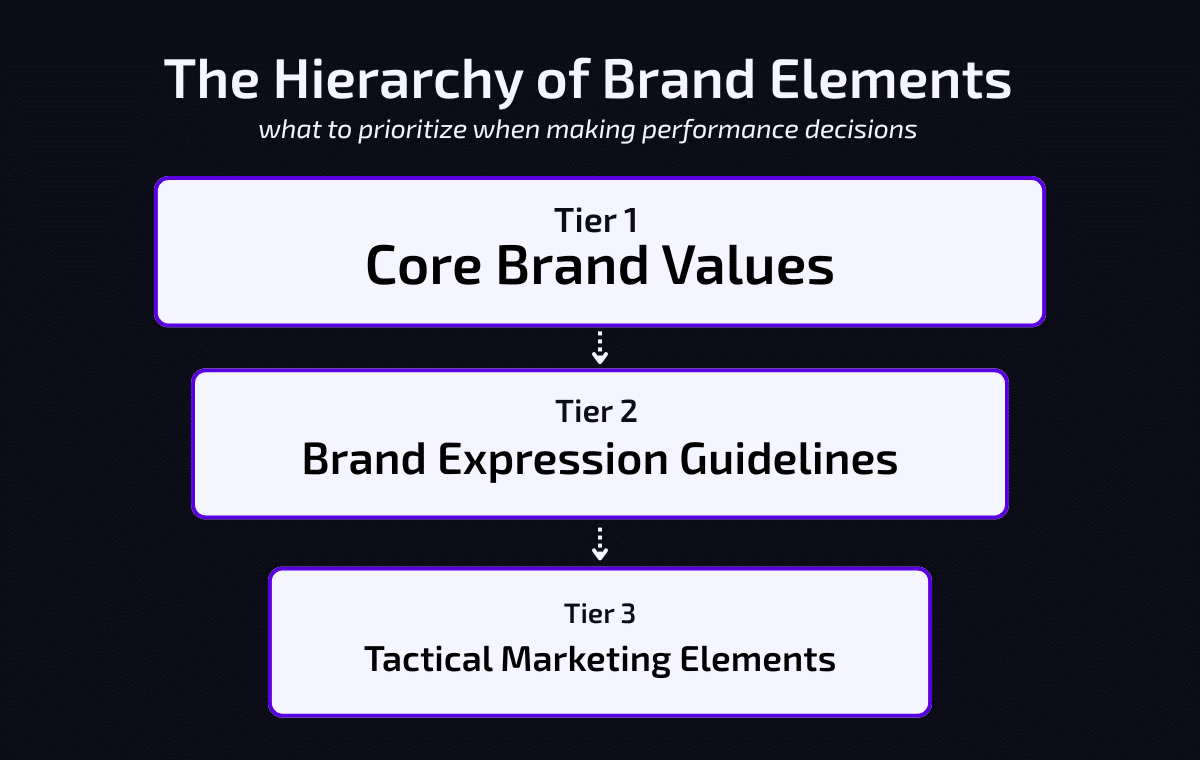
Not all brand elements deserve equal protection from data-driven changes. Consider this framework for evaluating which aspects to hold firm on and which to evolve based on performance:
Tier 1: Core Brand Values
These fundamental principles define your company’s identity and should rarely be compromised, even for performance gains:
- Ethical standards and commitments
- Mission and purpose
- Core customer promises
- Fundamental product/service quality standards
Tier 2: Brand Expression Guidelines
These elements shape how your brand appears but may evolve based on performance data:
- Visual identity (logos, colors, typography)
- Voice and tone guidelines
- Marketing channel preferences
- Content formats and styles
Tier 3: Tactical Marketing Elements
These should be almost entirely data-driven and regularly optimized:
- Call-to-action placements and wording
- Email frequency and timing
- Ad formats and targeting parameters
- Marketing platforms utilized
- Landing page layouts
The Origin of Your Brand Guidelines Matters
There’s a significant difference between professionally developed brand guidelines and those hastily created by a founder without strategic input:
- Professional guidelines typically focus on strategic positioning and customer perception, leaving room for tactical flexibility. They’re based on customer & market research, industry standards, and the professional experience of the people who create them.
- Founder-created guidelines often mix strategic principles with personal preferences, creating unnecessary constraints.
The Data-Informed Brand Evolution Process
Rather than viewing data and brand as opposing forces, successful businesses in Fort Collins, CO and beyond approach brand evolution as a strategic process:
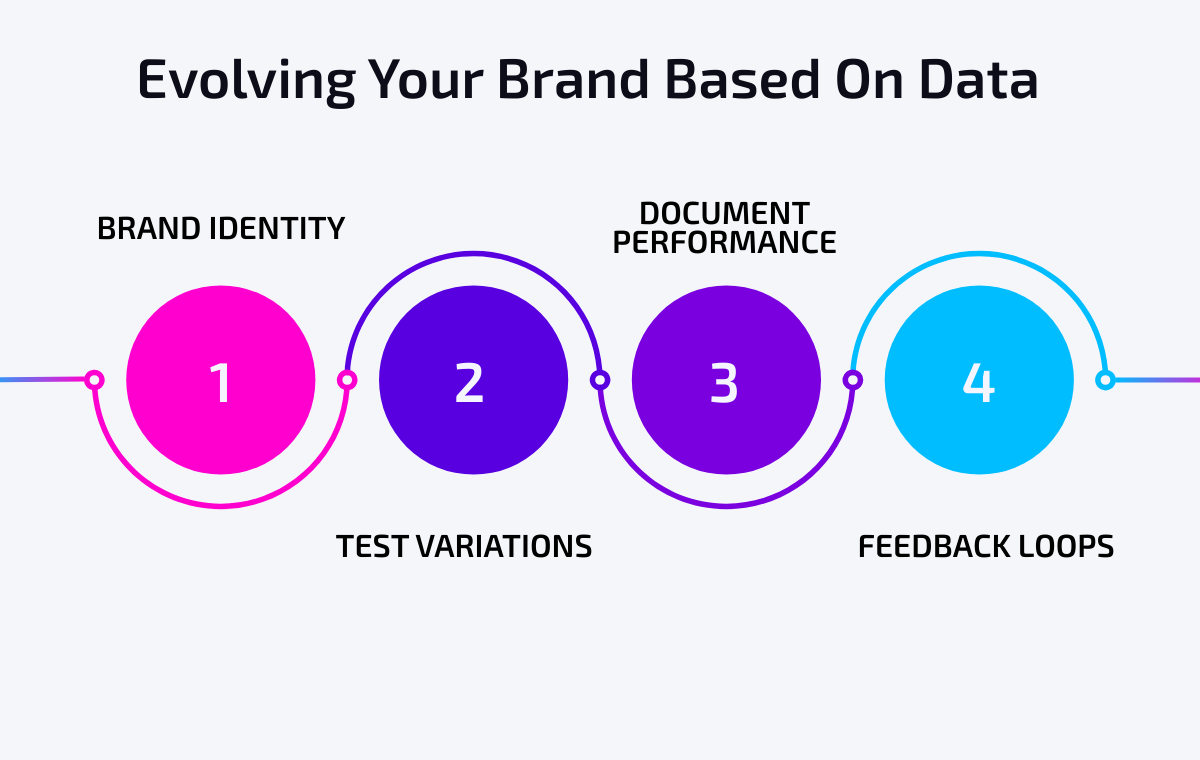
- Clarify what’s truly non-negotiable in your brand identity
- Test variations within brand parameters before rejecting guidelines
- Document performance impacts of both adherence and deviation
- Create feedback loops where performance data informs brand evolution
This approach maintains brand integrity while allowing necessary adaptation based on real-world performance.
The Balanced Approach: Data-Informed, Values-Aligned
This isn’t to suggest we abandon values for conversion rates. At Prospect Future, integrity remains central to our approach. The balance comes from:
- Testing tactics ethically and transparently
- Measuring their actual impact on your business goals
- Optimizing based on performance while respecting audience experience
- Building sustainable growth rather than short-term gains
Your data-driven marketing strategy should reflect both what works and what aligns with your brand values, creating marketing that serves both your business and your audience authentically.
From Assumption to Action: Your Next Steps
If you recognize yourself in this post, here’s how to shift from assumption-based to data-driven marketing:
- Identify areas where you’ve avoided tactics based on personal preference
- Develop a testing framework to evaluate these tactics objectively
- Establish clear metrics to measure actual performance
- Commit to following the data, even when it challenges your assumptions
This mindset shift represents one of the highest-leverage changes you can make to your marketing approach. If you feel like you can’t be objective in analysing your own bias, meet with a marketing consultant like Prospect Future!
Conclusion: Listen to What Your Data Is Telling You
Your marketing data tells a story if you’re willing to listen, one that might contradict your personal preferences but accurately reflects your audience’s behavior. The most effective data-driven marketing strategy comes from setting aside assumptions and letting performance guide your decisions.
At Prospect Future, we help businesses throughout Northern Colorado develop marketing systems that balance data-driven performance with values-aligned execution. The first step is simple but profound: acknowledge that your opinion isn’t your strategy, your data is.
Are you ready to let your marketing data speak louder than personal preference? The growth opportunities that emerge might surprise you.