
Conducting a thorough marketing audit requires access to data and analytics platforms, but what if you can’t get behind-the-scenes access? Whether you’re a consultant evaluating a potential client, a business owner comparing competitors, or a marketing professional refreshing your strategy, this comprehensive guide will show you how to perform an insightful marketing audit without requiring account credentials.
Why Marketing Audits Matter
Before diving into the specific steps, let’s clarify why this matters. A comprehensive marketing audit reveals disconnections in your digital ecosystem that could be costing you valuable leads and revenue. When marketing elements aren’t properly integrated, businesses waste resources and miss growth opportunities. The six foundational elements we’ll examine form the backbone of effective marketing for any business, regardless of industry.
Free Resource: Want to implement this audit yourself? Download our Complete Marketing Audit Checklist – a printable companion to this guide with all the steps organized for easy implementation.
Table of Contents
- 1. Website Analysis: Your Digital Foundation
- 2. Website Tracking Implementation
- 3. Advertising Account Analysis
- 4. Local Marketing Assessment
- 5. Search Engine Optimization Evaluation
- 6. Social Media Presence Evaluation
- Ready to Take Action?
The 6-Step Marketing Audit Framework
1. Website Analysis: Your Digital Foundation
A business’s digital footprint begins with its website, making this the natural starting point for any marketing audit. The functionality, user experience, and information architecture dramatically impact both search rankings and customer engagement.
Above-the-Fold Experience: The “Hero Section”
The “above-the-fold” area (visible without scrolling) originated from newspaper design, where the most important headlines and expensive ads appeared before the physical fold. On websites, this crucial area – commonly called the “hero section” – determines whether visitors stay or leave within 3-5 seconds.
Key elements that should appear in your hero section:
- Strategic navigation bar: Include your logo, 3-5 navigation links, and your primary call-to-action button
- Clear headline and subheadline: Your H1 should communicate your core offering immediately, with supporting text that connects to customer needs
- Engaging visual element: Authentic images outperform stock photos – if you can feature someone smiling or a branded image that keeps attention on your headline, that’s ideal
- Compelling call-to-action: Use distinct, action-oriented button text like “Schedule Your Marketing Audit” instead of generic “Contact Us” labels. Include a primary CTA button in a standout color, and consider adding a secondary button as a foot-in-the-door offer such as “Free Marketing Audit” that serves as a lower-commitment entry point
- Preview of upcoming content: Many designers prefer the hero section to be self-contained, but adding a teaser of trust badges or an interesting headline can capture attention and encourage scrolling
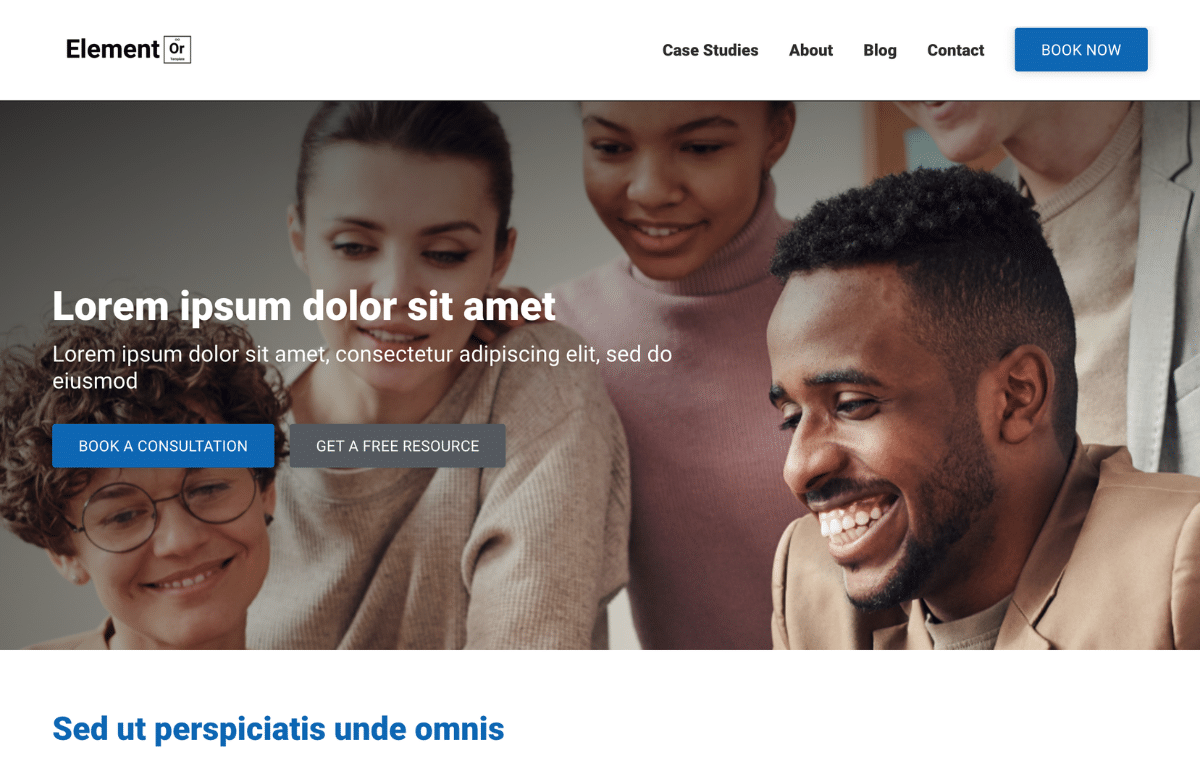
Minimize distractions: Users’ eyes naturally follow an F-pattern across websites. Keep this in mind when positioning elements, and avoid placing social media icons in the header where they could lead visitors away from your site. Include social feeds lower down on the page and social media links in the footer instead.
Mobile-First Design
Your website needs to be mobile-first. Users browse websites on mobile more often than desktop, and Google’s web crawlers have switched to mobile-first indexing. If your site isn’t optimized for mobile viewing, it creates a poor user experience and damages your search rankings.
Essential Homepage Components
Every effective business homepage should include these no-brainer sections:
- Trust indicators: Feature accreditations, service highlights, client logos, and industry recognition to build credibility instantly
- Social proof: Implement dynamic review feeds that pull directly from platforms like Google rather than static testimonials – this adds more credibility than curated testimonials
- Core offerings: Clearly highlight your primary products or services with distinct calls-to-action
Additional valuable sections to consider:
- Case studies demonstrating real results
- Brief, compelling about section that connects to your customer’s journey
- Recent, relevant blog content that showcases expertise
- Lead magnet to capture interested prospects who aren’t ready to buy
Email List Optimization & Newsletter Growth
Not every customer is ready to buy immediately. Many visitors want to learn more about your company or get some “free” value before spending money. Having an active newsletter or welcome flow helps warm up potential customers.
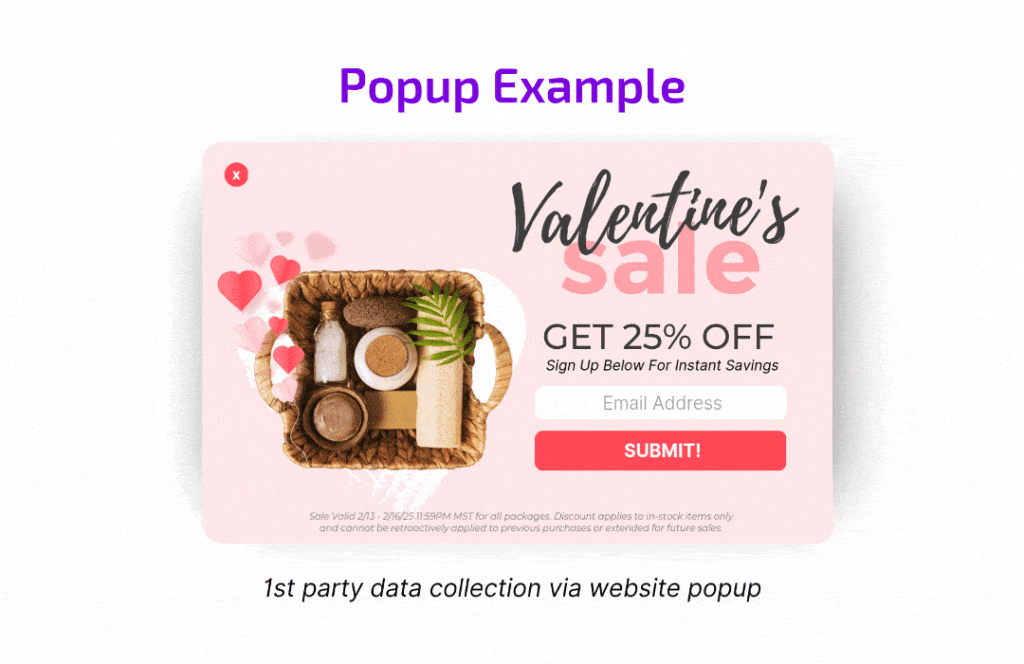
While people claim to hate popups, they remain incredibly effective for building email lists. Consider implementing:
- Strategic popup offers with clear value propositions
- Resource-driven lead magnets like free guides or tools addressing industry pain points
- Newsletter signup with genuine value proposition (not just “sign up for updates”)
- Limited-field forms (name and email only) to reduce friction – this is much less commitment than completing a full contact form
Contact Page Strategy
For lead generation businesses, the contact page (or contact forms throughout the site) needs to be intentional. Balance gathering sufficient information with minimizing required fields, while implementing effective spam prevention.
The contact page should NOT display your business email address directly. All leads should flow through either phone calls or form submissions. This approach enables better conversion tracking and prevents wasting time on spam emails.
Conversion tracking sends customer data back to ad platforms and informs them which ads, audiences, and campaigns are converting into actual leads. Tracking only website traffic or pageviews is one of the easiest ways to waste your marketing budget.
2. Website Tracking Implementation
If visitors are coming to your website but you aren’t tracking them, you severely limit your ability to understand marketing performance and follow up with potential customers.
Google Tag Assessment
Use Google’s Tag Assistant to check if the website is using Google Tag Manager and has a Google Tag implemented. Google remains a core provider in the internet space – having a Google Tag allows a business to track website traffic and user behavior in Google Analytics 4 while tracking campaign performance from Google Ads.
Meta Pixel Verification
Next, check for a Meta pixel using the Meta Pixel Helper Chrome extension. While some businesses are primarily search-driven, Meta’s ecosystem provides massive benefits for audience data and advertising. Having a Meta pixel enables powerful retargeting campaigns.

The Power of Retargeting
A primary reason for implementing website tracking is to retarget visitors who didn’t convert initially. Most ecommerce websites have conversion rates of just 1-3% on average – meaning out of 100 visitors, only 1-3 typically make a purchase.
Lead generation businesses might have higher conversion rates, but their cost-per-click is often significantly higher than what ecommerce businesses experience.
When a visitor doesn’t convert on their first visit, you don’t want to lose that potential interest or waste the investment you made to earn that initial click. Retargeting campaigns are typically among the most cost-effective campaigns you can run, often delivering the highest return on ad spend.
Conversion Tracking Verification
Verify that businesses have proper conversion tracking implemented:
- Ecommerce businesses should track purchase confirmation events
- Lead generation businesses should track thank you pages and form submissions
Use the Chrome extensions mentioned earlier (Google Tag Assistant and Meta Pixel Helper) to verify if conversion tracking is properly set up on order confirmation or thank you pages. Without proper conversion tracking, businesses cannot measure marketing performance accurately or optimize campaigns effectively.
3. Advertising Account Analysis
While getting direct access to ad accounts provides the clearest picture for a marketing audit, that’s not always possible. Fortunately, we have effective methods to understand a business’s advertising strategy without requiring login credentials.
Google Ads Audit
The types of ads a company runs reveal considerable insight into their campaign strategy and marketing sophistication. Using Google’s Ad Transparency Center allows you to see whether a company is actively running paid search campaigns, what campaign types they’re prioritizing, and gain insights into their approximate budget allocation.
When reviewing a business through this tool, analyze:
- The volume and frequency of active campaigns
- The ad formats they’re utilizing (text ads, shopping ads, etc.)
- The messaging and positioning in their ad copy
- Whether they’re running local, national, or hyper-targeted campaigns
Meta Advertising Review
A Meta ads blind audit can be even more revealing because creative elements in Meta ads are typically among the biggest performance drivers – not just audience targeting or campaign structure.
To examine a business’s Meta advertising strategy, use the Meta Ad Library and search for their business name. This transparent tool reveals active and inactive campaigns along with creative assets.
Here’s how to interpret what you find:
- No active ads: This indicates a significant opportunity gap – there’s substantial potential to improve marketing performance through Meta’s ecosystem
- Limited active ads (1-3): The business likely has a restricted marketing budget or is working with an inexperienced marketer who isn’t testing multiple variations
- Aging ads still running: This could indicate either exceptionally well-performing ads worth maintaining (if an ad performs well, there’s no reason to turn it off) OR it might suggest they’re working with an agency that isn’t giving their account proper attention
- Exclusively old ads (no recent launches): Their marketing team likely isn’t optimizing their account properly or testing new creative approaches
While numerous advertising platforms exist, Google and Meta typically represent the core channels for most businesses and should form the foundation of your marketing audit.
4. Local Marketing Assessment
Local businesses need to focus on additional platforms that help them stand out in their specific geographic market. If you’re evaluating an ecommerce business with no local focus, you can skip or modify this section.
Google Business Profile Optimization
The Google Business Profile (GBP) is easily one of the most critical platforms for local businesses. A well-optimized profile improves local SEO, enhances Google Maps ranking, boosts performance in Local Service Ads, increases your “real estate” on the search engine results page (SERP), and provides an additional customer communication channel.
When auditing a GBP, examine these key elements:
Review quantity and quality: If a business has fewer than a dozen reviews despite being established for some time, this represents a significant opportunity. Today’s customers routinely check business reputations before engaging. Consider implementing review generation systems or services like Podium to integrate review collection into business workflows.
Review engagement: Is the business responding to both positive and negative reviews? Active engagement demonstrates customer appreciation and commitment to service quality, which influences both existing and potential customers.
Profile completeness: The more signals you provide to Google about who you are and what you do, the better your chances of appearing in relevant searches. A complete GBP should include:
- Accurate business name
- Appropriate primary and secondary categories
- Compelling business description
- Founding/opening date
- Complete contact information
- Website link (ideally with UTM tracking parameters)
- Social profile connections
- Physical location details with precise map placement
- Service areas for businesses that travel to customers
- Comprehensive business hours including holidays
- Business attributes relevant to your industry
- Accessibility information, amenities, and parking details
Feature utilization: Check whether the business leverages additional GBP features like:
- Direct booking links for appointments
- Service integrations (such as DoorDash for restaurants)
- Product catalogs for retail businesses
- Menu listings for food service businesses
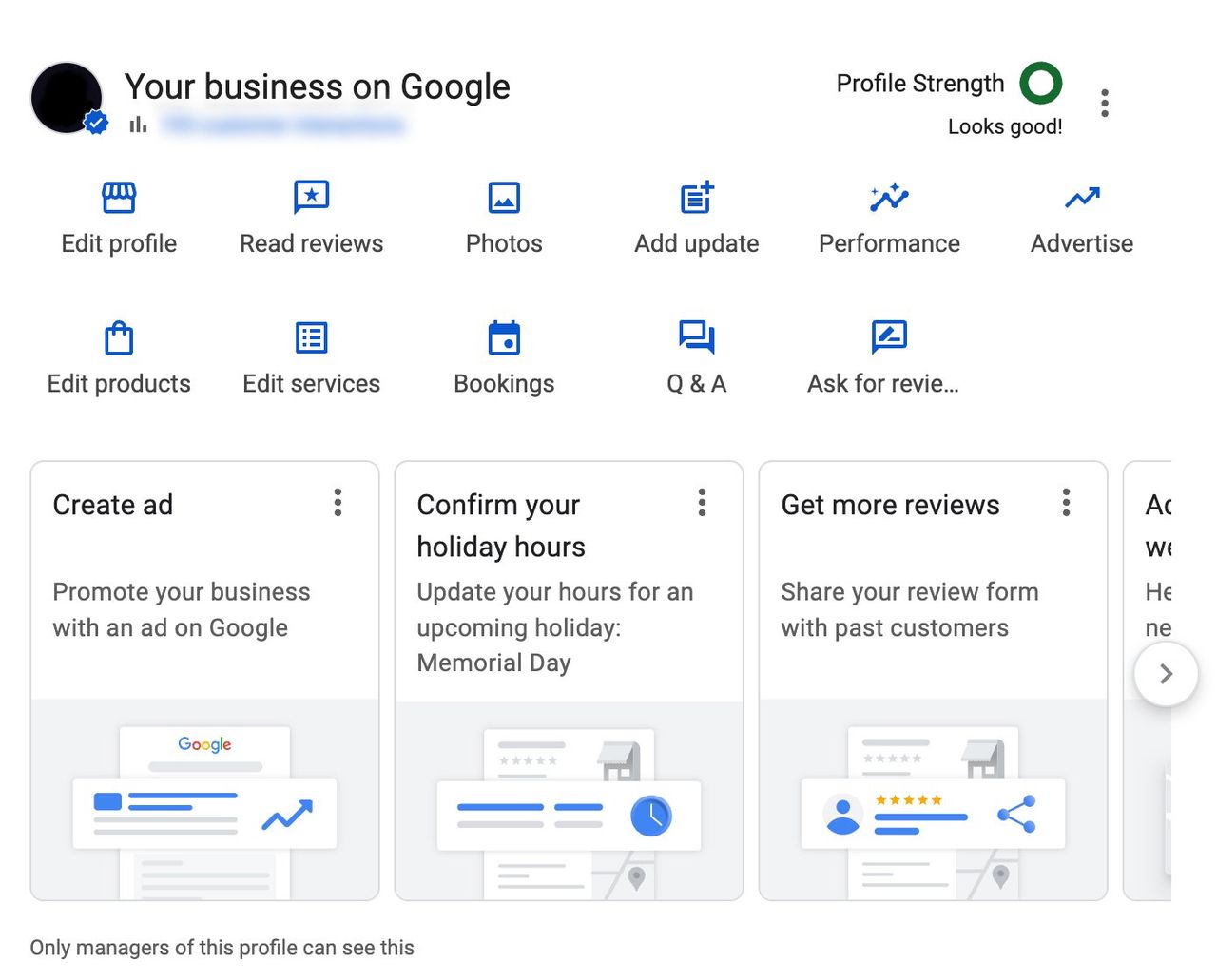
Visual content: Are they regularly adding high-quality photos and videos to their profile? Visual content significantly impacts local ranking and provides essential context for potential customers making decisions.
Posting activity: One area where almost every business can improve is adding regular “updates” to their Google Business Profile. These function essentially as social media posts for Google and increase your visibility on the search results page. This feature is perfect for promoting discounts, announcing seasonal offerings, or sharing general business updates.
Local Search Performance
Conduct searches for “[service] [location]” (e.g., “plumbers Fort Collins”) to evaluate:
Google Local Service Ads: For eligible industries, examine the business’s presence and ranking in Local Service Ads.
You can find the full list of industries that can use Google Local Service Ads on Google’s website. These highly visible placements appear at the very top of local search results with the “Google Guaranteed” badge.
A business’s ranking in Local Service Ads depends on several factors:
- Review volume and rating: More positive reviews significantly boost visibility and ranking
- Response time: Businesses that answer calls and messages promptly receive preferential placement
- Service area configuration: The geographic areas selected in their profile affect when and where they appear
- Operating hours: Wider availability windows can improve ranking and appearance in relevant searches
- Profile completeness: The more comprehensive their Local Service Ads profile and GBP, the better their visibility
- Budget allocation: While we can’t audit this without account access, budget size influences placement significantly
Paid search visibility: Look for the business’s search ads on the first page without clicking them (clicking costs them money). If they’re not appearing for relevant local searches, they may not be bidding aggressively enough or may have quality score issues.
Maps ranking: How does the business appear in Google Maps results? Maps ranking operates on its own algorithm. Interestingly, running paid campaigns can potentially secure multiple placements on the same search results page – one paid and one organic listing.
Organic position: Does the business appear organically on page 1, 2, or 3 of Google’s search results? If not, they likely have significant opportunities to improve their local SEO strategy.
Citation Presence
Citations function like digital yellow pages, creating consistent business listings across directories and data aggregators. Check for the business’s presence on:
- Facebook Business
- Yelp
- Better Business Bureau
- Industry-specific directories
- Local chambers of commerce
- Regional business associations
The quantity, quality, and consistency of these listings significantly impact local search performance. Citations should maintain identical business name, address, phone number, and website URL across all platforms (NAP).
5. Search Engine Optimization Evaluation
On-site SEO can be challenging to audit without direct access to a business’s search console, but several effective methods provide valuable insights without backend permissions.
Manual SEO Inspection
Title tags and meta descriptions: Hover over browser tabs to view title tags or use “View Page Source” to examine meta elements. Look for strategic keyword incorporation, appropriate length (50-60 characters for titles, 150-160 for descriptions), and compelling calls to action.
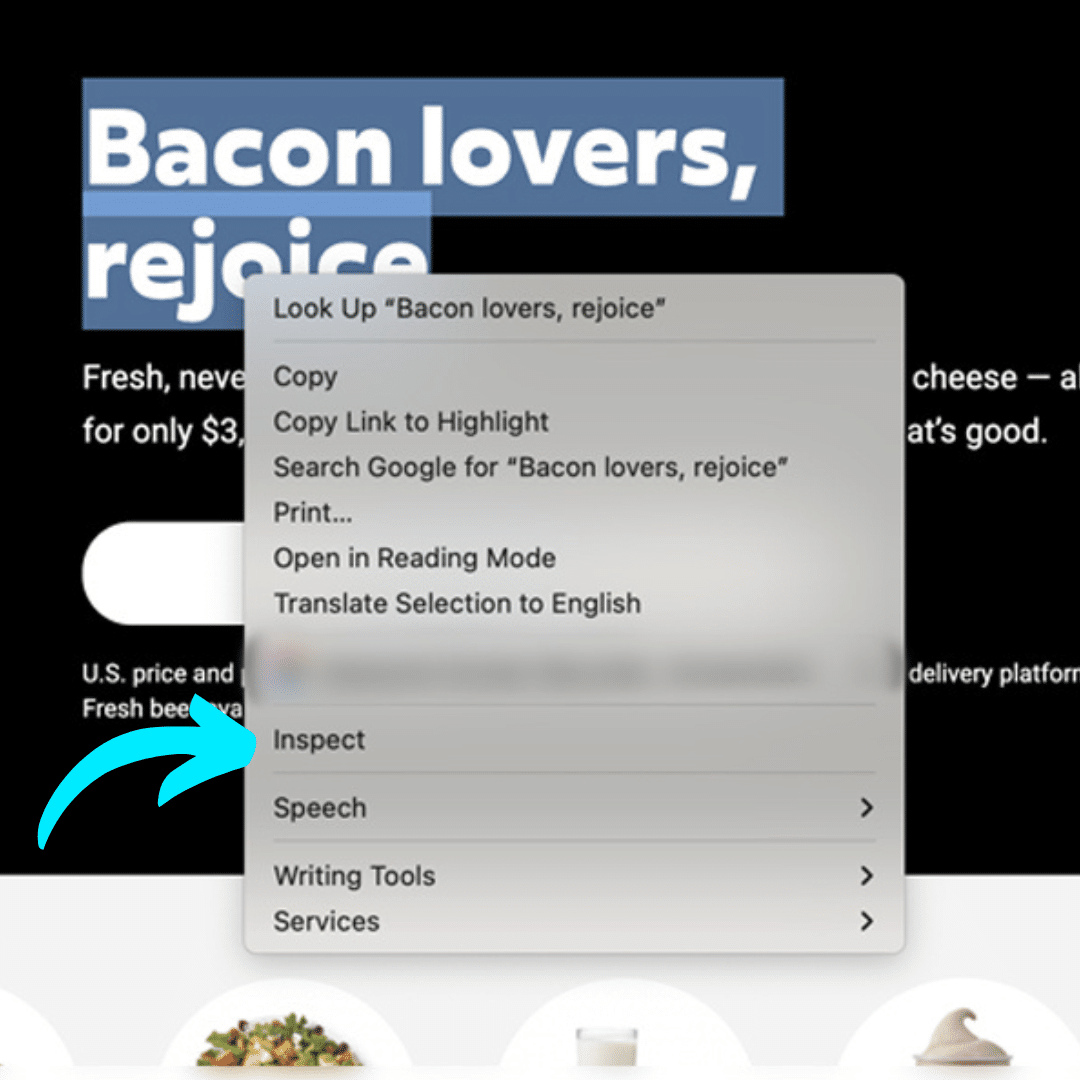
Heading structure: Right-click headings and select “Inspect” to verify proper hierarchical structure. The first heading should be an H1 containing a researched keyword. Many web designers mistakenly use heading tags for design elements rather than following proper SEO structure with appropriate keyword inclusion.
Content quality: Assess whether page content clearly communicates services/products, target audience, and unique value propositions. Is the purpose of each page immediately obvious? Does the content address customer pain points and provide clear next steps?
Sitemap examination: Most sitemaps are publicly accessible at domain.com/sitemap.xml or domain.com/sitemap_index.xml. This reveals:
- Site structure and organization
- Total indexed pages and posts
- Content freshness via “last modified” dates
- Publishing frequency and patterns
The “last modified” column is an easy way to see if a company is focusing on improving their website.
Technical SEO Tools
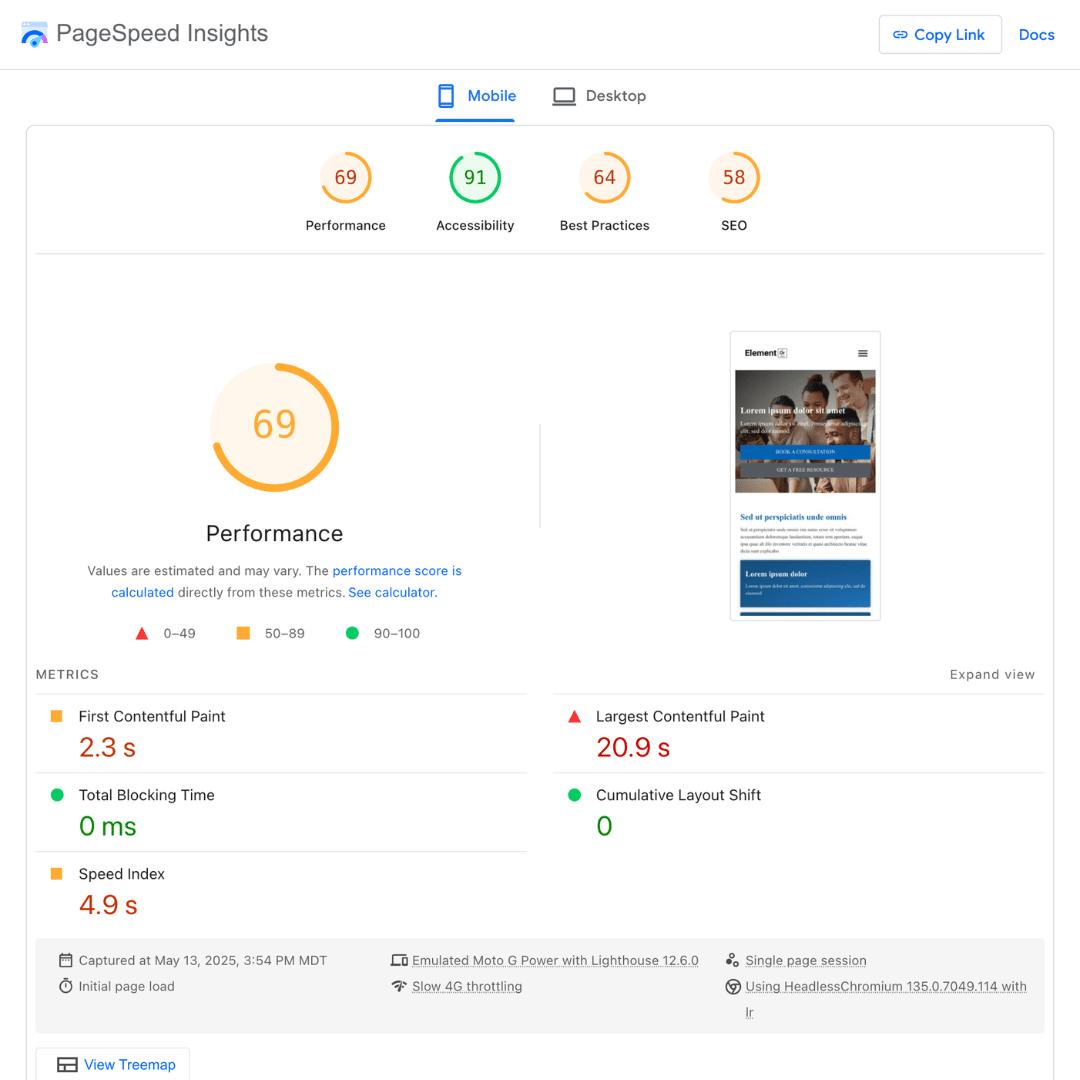
Google PageSpeed Insights: Use Google’s PageSpeed tool to evaluate loading performance – a critical ranking factor affecting both user experience and SEO. A website’s PageSpeed is one of the most important ranking factors. Remember how we mentioned capturing user attention within 3-5 seconds? If your page is loading that entire time, visitors are much more likely to bounce.
The tool analyzes both mobile and desktop performance, providing scores for:
- Core Web Vitals performance
- Accessibility
- Best practices
- SEO fundamentals
Ideally, your site should score in the green range (90-100) across all metrics. If not, PageSpeed Insights provides specific recommendations for improvement.
GTmetrix: For more detailed performance analysis, GTmetrix offers actionable recommendations with greater specificity than Google’s tool. It’s slightly more forgiving on site speed than Google’s metrics and provides a clearer breakdown of how to address performance issues.
SEO Platforms: Tools like SpyFu, SEMrush, BrightLocal, or Ahrefs offer competitive intelligence without requiring account access. Remember that these tools use their own web crawlers rather than direct Search Console data, so their insights are based on estimates and extrapolation.
6. Social Media Presence Evaluation
In today’s digital landscape, social media provides both social proof and insight into a business’s values and personality. Customers turn to these platforms to see completed work, gauge reliability, and understand company culture.
Universal platforms: Every business should maintain active profiles on Facebook and Instagram. Evaluate:
- Profile completeness and branding consistency
- Content quality and posting frequency
- Work showcases and portfolio elements
- Value-driven content beyond self-promotion
- Video adoption (particularly short-form content)
- Audience engagement and response patterns
Industry-specific platforms:
E-commerce businesses should prioritize:
- Instagram Reels for product demonstrations
- TikTok for reaching younger demographics
- Pinterest for visual discovery
Local service businesses benefit from:
- Nextdoor for neighborhood-level marketing
- YouTube for service explanations and tutorials
- Community Facebook groups for hyperlocal visibility
B2B companies should focus on:
- LinkedIn for professional networking and thought leadership
- Industry forums for specialized expertise
- Professional networks relevant to their sector
Applying Your Marketing Audit Findings
After completing this six-step marketing audit, you’ll have a comprehensive understanding of a business’s digital marketing ecosystem without requiring account access. This intelligence enables strategic recommendations for:
- Addressing critical gaps in their current strategy
- Prioritizing high-impact opportunities for growth
- Developing integrated marketing approaches that connect different channels
- Creating measurable improvement plans with clear benchmarks
At Prospect Future, we believe in marketing with integrity and purpose. A thorough marketing audit isn’t about finding quick fixes or manipulative tactics, but rather identifying opportunities to create meaningful connections with customers while driving sustainable growth.
Ready to Take Action?
Download our free Complete Marketing Audit Checklist to implement this framework step-by-step. This printable resource organizes all the audit elements in an easy-to-follow format so you can systematically evaluate any business’s marketing performance.
Need expert guidance with your marketing strategy? Our team specializes in comprehensive marketing audits for Northern Colorado businesses. Schedule a consultation today to discover how we can help you grow with integrity and excellence.